

Now, in today’s digital-first age, data breaches, identity theft, and account takeovers are far from being exotic occurrences and are more a reality of daily life in the United States today. From banking and medical-related websites to working from home and social networking sites, Americans depend on digital accounts for every single facet of their lives, thereby making password and authentication security more urgent today than ever before.
Learning how to leverage the power of strong passwords and multi-factor authentication is a great way to minimize cyber risks in the case of business cash management. In fact, together, the two security measures listed above are the cornerstone of safe account protection.
This guide explains how strong passwords can enhance security, the importance of using multi-factor authentication, and how effective password security can improve data security.
The rate of cybercrime in the United States continues to escalate, affecting not only consumers and small businesses but also large enterprises. In many cases, attackers take advantage of poor or reused passwords rather than advanced technical vulnerabilities. Simple combinations, such as names, birthdays, or repeated credentials, are still used despite wide publicity on password management.
That's where knowledge of how important strong passwords are comes in. Strong passwords make it way more difficult for attackers to break into accounts by brute-force attacks, credential stuffing, or phishing campaigns. When combined with multi-factor authentication, even stolen credentials become much less useful to criminals.
Improving password security is not only an IT concern; it is personal and pertains to financial stability, privacy, and digital trust.
To appreciate how strong passwords safeguard your information, it is important to understand what strength means in definitions under modern cybersecurity standards.
A strong password typically includes:
Length is more important than complexity by itself. The longer the password, the harder it will be to decrypt, as it will take the hacker exponentially longer to figure out what it is by trying to guess it at random. Thus, by concentrating on the security aspect of passwords, users can make a significant impact on preventing illegal access and enhancing the security of their accounts on platforms.
One of the easiest ways to explain the benefit of stronger passwords is in the way they offer business data protection against common attacks.
A brute force attack uses software that tests millions of combinations every second. Weak passwords are easily breached, while strong and long ones may take years or even centuries to be cracked. This makes repeated use of passwords from previous attacks important for credential-stuffing attacks, hence the need for a different password for every account.
Secure passwords minimize the effectiveness of phishing scams. Even if the user has mistakenly put the passwords in the phony site, multi-factor authentication ensures an added level of security to the account.
However, the use of strong passwords is no longer sufficient. This is precisely where multi-factor authentication comes into play.
Multifactor authentication involves the user’s proof of identity in two or more factors, including:
Even if an attacker manages to grab a password from a victim, two-factor authentication makes it impossible to access any account without entry of the second factor. This is highly effective in securing email accounts, banking sites, and office accounts.
U.S. businesses dealing with sensitive information have made multi-factor authentication a norm in terms of organizational security, rather than adding benefits.
How strong passwords complement multi-factor authentication is vital to securing data. Passwords are the primary means of protection as an initial barrier that prevents hackers or bots from gaining access easily. Multi-factor authentication is the net that catches the attackers should they succeed in overcoming the other barrier of passwords.
These three elements make password protection more secure, safeguard personal and business information, and provide better protection for accounts on many of the digital services that are common in the United States.
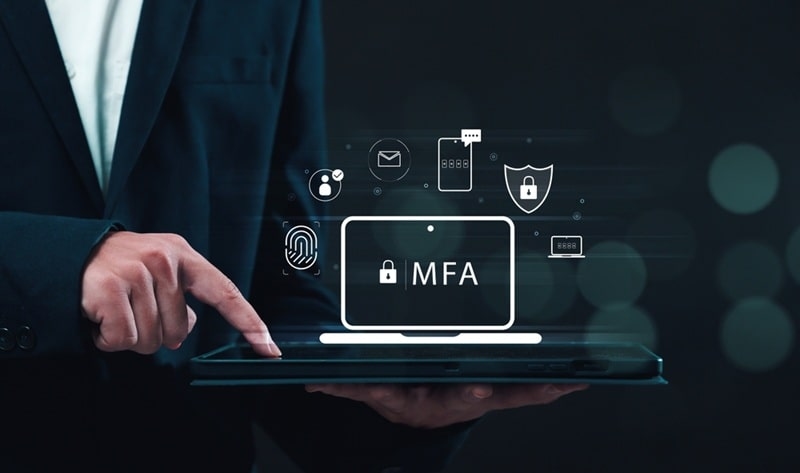
Knowing how to better secure password data involves more than just creating one strong password.
Periodic password change practices for high-risk accounts, like email and banking, are also helpful for protecting accounts.
Multi-Factor Authentication Breaches can start with compromised credentials. Multi-factor authentication prevents this attack vector because it’s hard for the attacker to get around the extra level of security.
In the US, medical, financial, and educational institutions are increasingly employing multi-factor authentication techniques for compliance purposes. MFA, on the other hand, protects personal information like Social Security numbers, taxes, and medical information.
When paired with an understanding of how strong passwords work, MFA adds a powerful level of protection against the risks of costly data breaches.
Even knowledgeable users can compromise their own personal security by making common mistakes.
Password habits matter not just for individuals, but also for families and small businesses across the United States. Shared devices, home networks, and cloud tools introduce additional risks when password security is neglected in the case of account protection.
Teaching both children and employees how strong passwords work. Showing them how multi-factor authentication increases account protection on shared or sensitive accounts reduces your liability. Poor password data security opens small businesses to ransomware attacks, financial fraud, and reputational damage.
That means, as varied the cyber threats get, the security technologies do, too. Though passwords are here to stay for a while, multi-factor authentication and passwordless options are gaining more traction.
More so, there is a growing trend in the U.S. toward biometric authentication and hardware security keys that promise even stronger protection of accounts by way of an improved user experience. However, it's still important to know how strong passwords work, as they continue to have their place in authentication systems.
In the future, too, security strategies will advocate for layered defense lines that will round up into strong passwords, multi-factor authentication, and user awareness to keep password security robust.
In the always-connected generation that we live in today, it is no longer a matter of awareness but a necessity that one comprehends the benefits of passwords and two-factor authentication on data security. Passwords and two-factor authentication tools serve as the backbone of account security.
Through the use of best practice strategies and learning how to improve password data security, U.S. consumers can limit their vulnerability to cyber threats significantly. Safe passwords and multi-factor security can effectively protect a computer system from hacking and data breaches. Enhancing password security today means protecting your digital reputation, financial prosperity, and personal privacy in the years to come.
Strong passwords can ensure secure online accounts by making them extremely hard for hackers to guess or crack using computers. Long passwords also ensure that brute force or credential stuffing attacks are less likely to succeed, thereby improving password security. This is important for secure online services that only require email or bank account logins.
Nevertheless, even when using strong passwords, there is always the vulnerability of account hacking through phishing and data breaches. With the implementation of multi-factor authentication, there will always be one more step, say, one-time password scanning or biometric scanning, which will in no way enable the hacker to authenticate and log in to the account. The implementation of multi-factor authentication, together with strong passwords, is the best way to make passwords in the U.S. more secure.
Learning to improve password data security can be achieved by using strong and unique passwords for each of our accounts, enabling multi-factor security options, and avoiding password repetition. Passwords on our accounts can effectively be managed using password managers, with frequent changes being an important factor too.
This content was created by AI